The logistics world has its own vocabulary. We talk about all sorts of things that don’t mean much to the average consumer. Take transloading and cross docking. Both terms are familiar to those of us who work in this industry. Outside of the industry, the terms are often used interchangeably.
If you are confused about what the two services entail, first know that they are not one and the same. Transloading and cross docking services are distinctly different from one another. They both accomplish the same goal, but they do so in different ways.
From One Unit to Another
The easiest way to describe transloading is to say it is the practice of transferring cargo between load units. Think of a load unit as a means of transportation. In other words, then, most transloading occurs at shipping ports. Cargo is removed from shipping containers and transferred to trucks or train cars.
One of the key characteristics of transloading is that the shipping container is taken off the ship, into a sorting facility, and emptied of its contents. Then it goes back out to the yard where it can be reloaded.
Meanwhile, inside the facility, cargo is sorted and prepared for loading on to another unit. In many cases, the cargo needs to be palletized before loading. This dictates that transloading is both time-consuming and labor-intensive. Cross docking is faster and doesn’t require nearly as much labor.
From One Truck to Another
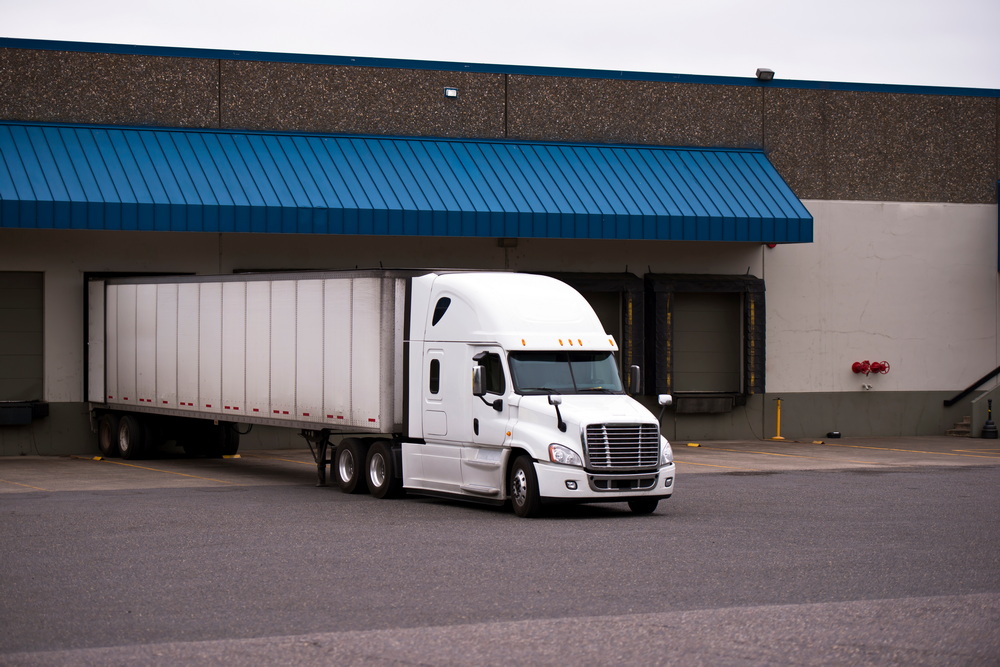
Where transloading often involves ships, trains and trucks, cross docking is limited to trucks alone. It is the process of transferring cargo from one truck to another across a large loading dock – thus the name.
A typical scenario would involve a number of trucks bringing large volumes of cargo directly from manufacturer to the loading dock. The loading dock essentially acts as a distribution center. Once those trucks arrive, pallets are removed and set aside to be put on other trucks scheduled to make local deliveries.
All the cargo from a single truck may ultimately wind up on three or four local trucks. Unlike transloading though, the cargo is never broken down and sorted. Pallets come off inbound trucks and on to outbound trucks without any handling in between.
On-Demand Retail Distribution
Transloading has been practiced in the logistics sector for a long, long time. Cross docking is relatively new by comparison. It was developed as the world moved away from more traditional distribution in favor of the on-demand model. Cross dock services are heavily utilized by the retail sector.
Cross docking increases the speed at which goods can be delivered by allowing for more efficient distribution. Cargo coming off inbound trucks does not need to be stored because it is set to head out in short order. In fact, turnaround time for cross dock services is generally less than 24 hours.
Cross docking is so efficient that large retailers are able to keep their shelves stocked without having to maintain onsite warehouse space. A shipping and receiving space big enough to accommodate daily truckloads is all that is needed. Goods come in during the day and are stocked on shelves overnight. The process repeats the following day.
It is All about Distribution
Whether you are talking transloading or cross docking, it’s all about distribution. And these days, distribution is about speed and efficiency. Cross docking services are designed to facilitate distribution fast enough to accommodate the on-demand economy. Transloading accomplishes the same thing, but in a different way and at a slower pace. It is a different type of process for a different need.